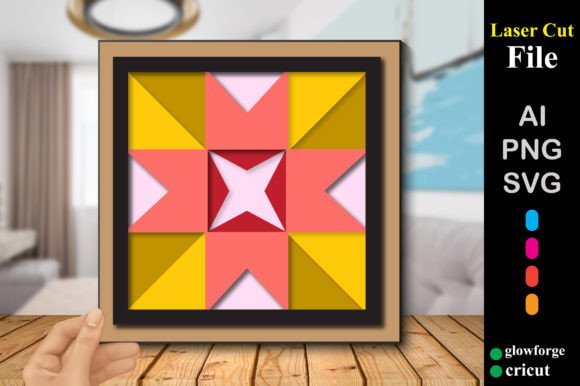
Exploring the Versatility of 3D Quilt Shadow Box Block Layered SVG
The 3D Quilt Shadow Box Block Layered SVG is a digital design that offers a unique blend of artistic detail and technical precision. This format allows users to create intricate visual compositions that can be easily adapted for various applications. Whether you're a graphic designer, a hobbyist, or a business owner looking for creative assets, understanding the features and potential of this file type can help you make informed decisions about its use.
One of the most notable characteristics of the 3D Quilt Shadow Box Block Layered SVG is its scalability. As a vector-based format, it maintains clarity at any size, making it ideal for both small-scale projects and large-format prints. This quality is particularly valuable when working with designs that require multiple iterations or adjustments in size without compromising image quality.
For creators, the availability of multiple file formats—SVG, PNG, and AI—adds flexibility to the workflow. SVG files are excellent for editing and resizing, while PNGs provide high-resolution raster images suitable for web and print use. AI files, on the other hand, are ideal for advanced graphic design software, offering more control over layers and effects. This variety ensures that users can choose the format that best suits their specific needs.
Applications of 3D Quilt Shadow Box Block Layered SVG
The 3D Quilt Shadow Box Block Layered SVG is not limited to a single industry or use case. Its detailed structure and layered design make it adaptable across different fields. In the world of digital art, artists often use such files to build complex compositions that can be further customized. The shadow box effect adds depth and dimension, creating a visually engaging experience that can be manipulated in various ways.
In the realm of interior design, these SVGs can serve as templates for wall art or decorative elements. Designers may incorporate them into digital mockups or use them as a basis for physical prints. The ability to adjust colors, add textures, or modify shapes makes them a versatile tool for personalizing spaces. Additionally, the high-resolution PNG version ensures that the final output looks sharp and professional, even when printed on larger surfaces.
Business owners and marketers also find value in using 3D Quilt Shadow Box Block Layered SVG files. These designs can be integrated into branding materials, social media content, or promotional campaigns. For instance, an e-commerce store selling home decor might use these SVGs to create eye-catching product visuals that stand out in online listings. The layered structure allows for easy customization, enabling businesses to maintain a cohesive brand identity while offering unique designs.
Advantages of Using 3D Quilt Shadow Box Block Layered SVG
One of the primary benefits of the 3D Quilt Shadow Box Block Layered SVG is its ease of use. Unlike traditional raster images, which can become pixelated when scaled, SVG files retain their quality regardless of size. This feature is especially useful for designers who need to adapt their work for different platforms, from mobile screens to large billboards.
Another advantage is the level of detail that can be achieved with this format. The layered nature of the design allows for precise control over individual elements, making it easier to edit specific parts of the composition. This level of customization is invaluable for users who want to tailor the design to their specific requirements without starting from scratch.
Additionally, the absence of watermarks in the original files ensures that users can freely use the designs in their projects. This is particularly important for professionals who rely on high-quality assets for client work or commercial use. The availability of 300ppi PNG files further enhances the usability of the design, as it provides a reliable option for print-ready outputs.
Considerations When Working With 3D Quilt Shadow Box Block Layered SVG
While the 3D Quilt Shadow Box Block Layered SVG offers numerous benefits, there are some considerations to keep in mind. For users unfamiliar with vector editing software, the learning curve can be steep. Programs like Adobe Illustrator or Inkscape are commonly used for working with SVG files, and mastering these tools may require time and practice.
Another factor to consider is compatibility. Not all design platforms support SVG files natively, so users may need to convert the files to other formats for certain applications. This can sometimes lead to a loss of quality or functionality, depending on the conversion method used. It’s essential to test the files in the intended environment before finalizing a project.
Finally, while the digital nature of the files eliminates the need for physical shipping, it also means that users must have access to the necessary software and storage space. Ensuring that the files are properly backed up and organized is crucial, especially when working on large or complex projects.
Best Practices for Utilizing 3D Quilt Shadow Box Block Layered SVG
To get the most out of the 3D Quilt Shadow Box Block Layered SVG, it’s important to follow best practices that maximize efficiency and quality. One approach is to organize the files in a structured manner, separating different versions (SVG, PNG, AI) into distinct folders. This helps streamline the workflow and reduces the risk of confusion or errors.
Another tip is to experiment with the design elements before finalizing the project. Adjusting colors, adding gradients, or modifying the layout can significantly enhance the visual appeal of the final output. Many design programs allow for real-time previews, making it easier to see how changes will affect the overall composition.
Collaboration is also a key aspect of working with these files. If multiple people are involved in a project, ensuring that everyone has access to the latest versions of the files is essential. Cloud storage solutions or version control systems can help manage this process efficiently, especially for larger teams or long-term projects.